Steven Garofalo
Spirituality/Belief • Education • News
BIBLICAL HOSPITALITY IN PORTUGAL
By Steven Garofalo, September 9, 2024 (Copyright 2024)
September 09, 2024

I have had the privilege to serve the body of Christ in many places around the United States and countries around the world. The one thing that shocks me every time is that while I always come with the greatest resources, I can never seem to be able out-give or out-serve those I came to serve.

TODAY, I am going to share with you from the Book of Romans, what God tells us through Paul regarding our showing “Hospitality” to others in the body of Christ. Let’s get started.

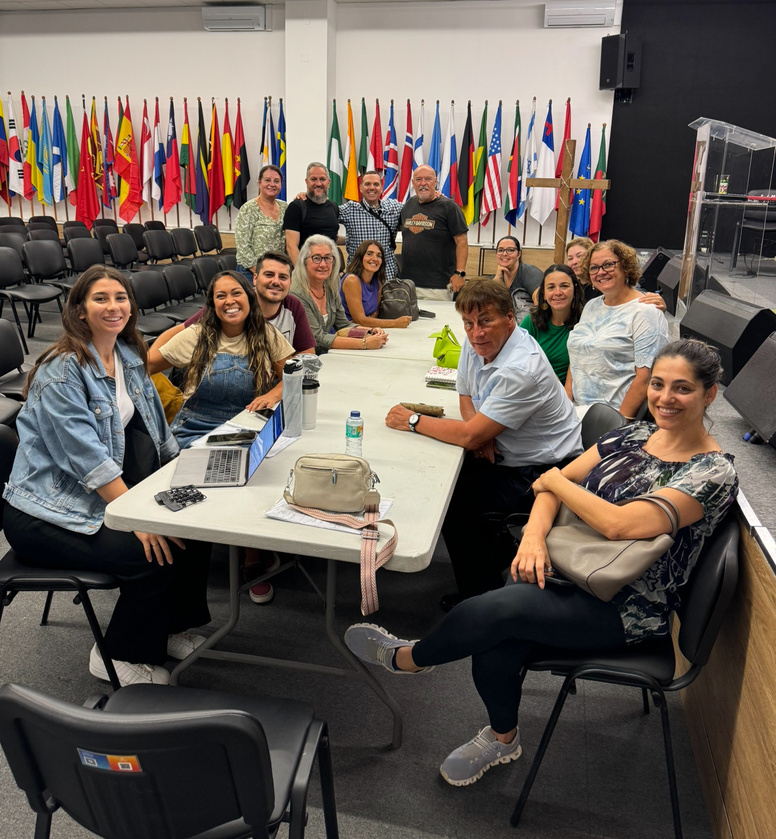
Upon returning from eight-days in Portugal, meeting with fellow believes and churches between Lisbon, Cascais to Porto, I was greatly refreshed in my soul. For starters, my friend of 40 years and travel companion, Dr. Jeff was a great joy to spend time with. We had never before traveled together on such a long trip, and he was as hospitable as the people we visited with. That in of itself made the trip of great joy.

The people we met along the way, especially my friends Pastor Eddie, Tom, Zilton, Céu, Jorge, Brandon, Tiago, and many others God introduced us to showed us great hospitality in a country we had never been to before. These fellow believers showed us love, gave of their time, and made sure that we were taken care of. When we broke bread (eat together), we sat for hours, enjoying wonderful food, desert, coffee and most of all-deep, meaningful Christian fellowship. That was the best part of the trip for me personally.

What was refreshing is that none of them expected anything in return. I had brought ten copies of my book “All Roads Don’t Lead To Heaven” as a very small token of my appreciation and they authentically appreciated the book. Pastor Eddie sent a message that he had read the book by the time I arrived back home and asked where he could get additional copies. I wish I could have delivered a suitcase of books for them as a small token of appreciation, but all I could take with me were ten copies since I only brought carry-on luggage. The point is that they authentically appreciated my attempt to out serve them. In the end, once again, I was unable to out serve any of these special people. It was like being home for me and my friend Jeff. The reason for this were the people. I was with the family of Christ and they, without having to try, effortlessly lived out God’s hospitality. Despite money, resources and ability, each gave of their heart. This touched me so deeply that I got up this morning and wrote a short article on what Hospitality is. Let’s jump in and take a look now at biblical hospitality.

SETTING THE SCENE-WHAT IS BIBLICAL HOSPITALITY?

First, I want to look at Romans 12, verse 9. Here, Paul speaks to service to the body and living righteously according to God’s Word and ways. In verse 1, Paul writes righteousness practiced in relation to ourselves. In verse 3, Paul writes about righteousness in relation to the church, and in verse 9, Paul writes about our practicing righteousness in relation to society. I want to focus on verse 9.

Before we do that, I would like to point out in verse 3 that God makes clear through Paul that we are not to think of ourselves more highly than we ought to think but rather to think of ourselves with sober judgment-each according to our authentic faith in Christ. Verse 5, Paul points out that we are individuals but one body in Christ, hence we are members one of another. This is important, because as one body, we are to edify Christ, the church, and one another according to the gifts we have been given.

“Having gifts that DIFFER according to the grace given to us, let us use them…” (v.6). It’s within this spirit that we jump to the final of three ways that righteousness is to be practiced within the body of Christ, and that is in relation to SOCIETY. Society includes both believers and non-believers.

Paul writes in verse 13 that we are to, “Contribute to the needs of the saints and seek to show hospitality” (Romans 12:13). The word “CONTRIBUTE” (v.13) is the form of the verb “KOINONEO” and means “TO SHARE”. In this context, sharing one’s resources to help with others who have serious needs.

What is Paul saying here in verse 13. How do we contribute to the needs of the saints and seek to show hospitality? HOSPITALITY means “LOVE” of strangers. The primary reference is to housing travelers, though all forms of hospitality are included. The progression in this verse is significant. As we dedicate ourselves to meeting the needs of our fellow believers, we will have opportunities to serve strangers and thus witness to them about the love of Christ. While I had been speaking with the saints we met with, I had never met them in person. As such, to some degree, Dr. Jeff and I were strangers.

DISCLAIMER

It’s important to note that in biblical times, to beg and use people was a public shame, and hospitality was practiced universally. This meant that there was societal accountability to reciprocate in showing hospitality to others. I say this from the perspective that I have also seen Christians use or uprightly take advantage of other Christians (in their extending hospitality) in the name of Jesus and the biblical Scriptures. That is simply wrong on many levels. For example, if you accepted hospitality but never showed, expressed or extended hospitality to others, you would be looked at with shame. In Luke 7:36-47, Simon failed to greet Jesus and provide water to wash his feet. By this omission, he violated the MOST BASIC CUSTOMS of Eastern hospitality. This was a profound insult and hinted at hostility towards Jesus.

IN CONCLUSION

This trip was refreshing to my soul as I experienced unconditional love, deep Christian hospitality, and unmatched fellowship and love-often (but not always) around breaking of bread. In biblical times, the sharing of food together was a token of friendship, a for of convent and commitment. This is what I experienced.

One of the most despicable acts in the ancient worlds was to eat with someone and then betray them (Obadiah 7; Psalm 41:9). And of course Judas (John 13:18). I had only one small experience that was less than unconditional love in Lisbon, but even that meeting was a joy. Portugal, like Sicily, was once ruled by the Arabs and still has some wonderful tradition from the Arab world imprinted upon their cultural norms. This includes the beautiful tiles used to cover their homes, the way that Cod fish (the main dish) is prepared among other things. I believe that to some degree the ancient practice of showing hospitality was carried over much the same as the entire “code” of hospitality in the Middle East was so strong that it evoked a biblical warning: “Do not neglect to show hospitality to strangers, for thereby some have entertained angels unaware” (Hebrews 13:2). It is also the dimension of mutual commitment in the starting of food that provides the Eucharist with one of its most dynamic meanings.

I thank God for His entrusting to me to visit and serve my brothers and sisters in Portugal. I am not one to give up, so, with God’s will and help, I will return to Portugal in 2025 in an effort to serve these godly people one again. Pastor Eddie extended a warm welcome to return in 2025 to minister to the body of Christ at his church through a generous invitation and I am planning to go with God’s will. As I look back, it became apparent that as hard as I tried, I still was unable to out-give or out-serve those I came to serve. I guess that’s the beauty of the true body of Christ. Biblical hospitality!


community logo
Join the Steven Garofalo Community
To read more articles like this, sign up and join my community today
0
What else you may like…
Videos
Podcasts
Posts
Articles
Live Chat
Community Message on Islam by Steven Garofalo January 7 2026

This is an exclusive video for my community. We should all be very encouraged as God has protected us as Christians to live out and share the Gospel another day. That said, the two greatest cities in Western Judeo-Christian history are London and New York City-both of which are now under the control of radical Islamists. That said, God is at the helm but we are His servants for good. "For the one in authority is God's servant of your good. But if you do wrong, be afraid, for rulers do not bear the sword for no reason. They are God's servants, agents of wrath to bring punishment on the wrongdoer." (Romans 13:4 NIV).

It's time for all of us to get off the bench and into the game. Please consider me a resource as my Masters degree in Apologetics was completed with an Emphasis on Islamic Studies. I would encourage you to have me speak at your school, church, Bible study or Sunday school class. Simple click on the LINK below to schedule a call with me and have a biblically blessed day-Steven...

00:05:47
Live Chat
PURA VITA-Missions In Costa Rica 2025

PURA VITA in Costa Rican means "PURE LIFE". I just spent a week in the mountains of Costa Rica with my two brothers, preaching Sunday's service. God is at work in Costa Rica. I pray that you are blessed by this episode. Reason for Truth is partnering with Rancho Costafalo as we move forward in spreading the Gospel and EQUIPPING the body of Christ in this beautiful country.

https://www.ranchocostafalo.com

00:10:13
MORNING IN COSTA RICA

This is a brief view of where we are staying

00:00:23
Live Chat
PERSECUTED-Christians in Political Discourse

What does persecution and Christians in or not in political discourse have in common? EVERYTHING. This is not a political message but a biblical one. I hope you are encouraged and motivated by this episode.

RIGHT FOR YOU, BUT NOT FOR ME-A Response To Moral Relativism
Video Book Trailer: https://www.reasonfortruth.org/resources

Shipped within the United States
https://www.equippedacademy.com/right-for-you-but-not-for-me-a-response-to-moral-relativism

AMAZON
https://www.amazon.com/dp/0989744604/ref=cm_sw_su_dp

PERSECUTED-Christians in Political Discourse
Live Chat
The Intersection of Faith and Reason

Today's Episode is an interview with Steven Garofalo and Dr. J. Thomas Bridges from Southern Evangelical Seminary. In a little over 32 minutes, you are going to learn a lot about the intersection of FAITH and REASON and how they compliment each other!

The Intersection of Faith and Reason
Live Chat
FROM SUFFERING TO PERSEVERANCE

We live in difficult times in trying times full of suffering. The secret to pushing through and overcoming suffering is to persevere. In today's episode Steven is going to take us through the Word of God, focussing on the Apostle Paul's words regarding why, how and when to persevere through trials and times of suffering. Tune in and if you like-take notes. Thank you for tuning in and let's get started!

FROM SUFFERING TO PERSEVERANCE
IS YOUR SOUL WEARY?

"Is your soul weary? Jesus offers rest that is much deeper than physical rest- He gives you rest in mind, soul and spirit."
Matt 11:28

ACHIEVING GREAT THINGS!

TAMPA WON THE NATIONAL CHAMPIONSHIP: My nephew is the goalie. My sister Gail is to his left bottom picture

GIVE WHAT IS OWED
(From my Portugal Bible Study)

*GIVE WHAT IS OWED*
Romans 13:5–7 (NIV)
“_Therefore, it is necessary to submit to the authorities, not only because of possible punishment but also as a matter of conscience. This is also why you pay taxes, for the authorities are God's servants, who give their full time to governing. Give to everyone what you owe them: If you owe taxes, pay taxes; if revenue, then revenue; if respect, then respect; if honor, then honor._”

*BACKGROUND/CONTEXT*
Beginning in Romans 12, Paul shifted his message from explaining the theology of the gospel to describing how the gospel should transform our lives and how we should live as believers. 

In Romans 12, believers are called to become “living sacrifices,” marked by humility, love, peace, and overcoming evil with good. Then in Romans 13:1-4, which we studied yesterday, Paul applied these principles to the Christian’s relationship with governing authorities. He explained that government is part of God’s “ordering of society” and that believers should live respectfully and peacefully within the nations where God has placed them.

Today, Paul continues this teaching by moving from the general principle of submission to practical examples of Christian conduct within society. 

*SUBMISSION AND CONSCIENCE*
_Therefore, it is necessary to submit to the authorities, not only because of possible punishment but also as a matter of conscience_

In yesterday’s study, Paul focused on our external submission to governing authorities. However, in today’s study, he moves to our inward motivation. As Christians, we are not only to obey authorities because we fear punishment, but because we understand that honoring lawful authority is part of living faithfully before God. In other words, submission is not simply about avoiding consequences; it is also about maintaining a clear conscience before the Lord.

The word “conscience” (_syneidēsis_) refers to our inner moral awareness, our God-given understanding of right and wrong. For believers, our conscience is shaped by the Holy Spirit and the truth of God’s Word. Paul’s point is that we as Christians should want to do what is right - not because we are forced to, but because our hearts have been transformed by Christ.

This same idea appears in 1 Peter 2:15, where Peter writes: “_For it is God’s will that by doing good you should silence the ignorant talk of foolish people._” Christians should be known as people of integrity whose conduct reflects their faith even when no one is watching.

In a culture that often celebrates rebellion, outrage, and hostility toward authority, we are called to demonstrate humility, wisdom, self-control, and peaceful living. Our goal is not to win political arguments, but to live with a clear conscience and a faithful witness before both God and the world.

*PAYING TAXES AND SERVING SOCIETY*
_This is also why you pay taxes, for the authorities are God's servants, who give their full time to governing_

Paul now moves from the principle of submission to a practical example: paying taxes. In the Roman world, taxes were unpopular and burdensome, just as they are for many people today. Yet Paul teaches that Christians should willingly pay those taxes they owe. This is because government, despite its faults, serves an important role in maintaining order within society.

Again, Paul describes governing authorities as “God’s servants.” This time he uses the Greek word (_leitourgos_), which is normally used for public service or even priestly ministry. Paul’s point is not that rulers are spiritually righteous, but that God can use civil authorities to accomplish His purposes, especially in maintaining order, protecting people, and carrying out justice.

Jesus Himself addressed this issue when questioned about paying taxes to Caesar, in Matthew 22:21, he replied to the Jewish leaders:  _“Give back to Caesar what is Caesar’s, and to God what is God’s._” Jesus acknowledged the legitimate role of earthly government while also reminding us that our ultimate allegiance belongs to God alone. Governments may receive taxes, but our worship, identity, and devotion belong only to God.

For Christians, paying taxes and obeying laws are a part of living honorably before God. Believers should be known as people of integrity who contribute to society rather than constantly resisting or exploiting it. Remember, every earthly kingdom is only temporary compared to the eternal rule of Christ.

*GIVE WHAT IS OWED*
_If you owe taxes, pay taxes; if revenue, then revenue; if respect, then respect; if honor, then honor_

Paul concludes this section with four commands summarizing how Christians should live responsibly within our society. Believers are to “_give what is owed_” to those in authority. This includes not only financial obligations, but also the attitudes we show toward people.

*First: “_if you owe taxes, pay taxes._”* The word used here refers primarily to direct taxes such as land or personal taxes. Christians are not to avoid their civic responsibilities simply because they dislike the government or disagree with its policies.

*Second: “_if revenue, then revenue._”* This refers more to indirect taxes such as customs duties or tolls placed on goods and commerce. In essence, Paul is saying believers should conduct themselves honestly in all areas of public life and business.

*Third: “_if respect, then respect._”* The word “respect” carries the idea of reverence or proper regard for authority. Christians may strongly disagree with leaders or policies, but Scripture calls believers to avoid contempt, slander, and dishonor. “_Show proper respect to everyone, love the family of believers, fear God, honor the emperor._” 1 Pet 2:17.

*Fourth: “_if honor, then honor.”_* Honor means recognizing the position and responsibility that authorities hold. This does not mean treating leaders as moral superior, or worthy of homage. Rather, Christians acknowledge that authority itself is part of God’s ordering of society.

In many ways, these commands summarize Christian citizenship. We are called to display a different spirit, one that reflects the character of Christ and points people toward His kingdom. 

*APPLICATION*
One of the greatest testimonies that we as Christians can give to the world is not what we say, but how we live. If we do not live the faith we proclaim, no one will listen to our words. Paul reminds believers that submission, honesty, respect, and integrity are all part of our witness to Christ. Christians should never be known for being dishonest, hateful, rebellious, or constantly outraged people. Instead, we should be known for our Christlike behavior and doing what is right even when it is difficult.

This does not mean we always agree with our governments or approve of the decisions leaders make. But it does mean that our conduct should always reflect the character of Christ. The world is watching how Christians speak, behave, work, pay what they owe, treat others, and respond to authority.

John Stott once wrote: “The greatest hindrance to the advance of the gospel worldwide is the failure of the lives of God’s people.” This is a critical point. The gospel is always hindered when Christians proclaim Christ with their lips but dishonor Him through their conduct.

So, guard your witness carefully. Guard your speech, your attitude, your honesty, and your humility. Ask yourself: Do my words online reflect Christ? Does the way I speak about leaders reflect the Spirit of Jesus? Am I known more for outrage or for integrity? As followers of Christ, we are called to live in such a way that people see not merely our opinions, but the love and character of Christ Himself shining through us.

Read full Article
WHEN WE ARE WEEK-WE ARE REALLY AT OUR STRONGEST

WHEN WE ARE WEEK-WE ARE REALLY AT OUR STRONGEST

By Steven Garofalo May 1, 2026

While each one of us enters the new week differently and at different stages of life, I’m reminded how temporal life is and how or present, difficult times are really when we are the strongest. Paul says in 2 Corinthians 12:7-10 “So, to keep me from becoming conceited because of the surpassing greatness of the revelations, a thorn was given me in the flesh, a messenger of Satan to harass me, to keep me from becoming conceited. Three times I pleaded with the Lord about this, that it should leave me. But he said to me, “My grace is sufficient for you, for my power is made perfect in weakness.” Therefore, I will boast all the more gladly of my weaknesses, so that the power of Christ may rest upon me. For the sake of Christ, then, I am content with weaknesses, insults, hardships, persecutions, and calamities. For when I am weak, then I am strong.” A thorn was given to Paul, and I believe perhaps to most if not all of us. With Paul, this seems to have been some recurrent physical affliction. Perhaps a migraine headache, malaria, or epilepsy as many have suggested. Only God knows.  

Most importantly, Paul saw this as the work of Satan, permitted by God for a good purpose (keeping him humble). It could not be relieved through prayer in Paul’s case (v.8). But Paul makes clear in v.9 that “the power of Christ in him was more important than freedom from pain”. Paul makes clear that having to boast and defend himself made him feel foolish. It seems that everyone could see the thorn Paul suffered from-it was no secret. Some among the Corinthian Christians probably thought less of Paul because of his torn in the flesh, but they had known nothing of the amazing spiritual experience that lay behind it. The thorn, Paul said was bad used for good, as the New King James says, “a messenger of Satan”. God allowed Satan’s messenger to successfully keep Paul from becoming exhaled above measure…in his own eyes and that of others. Boy, how this hits home with most of us. Our failures are really chisel marks in our clay and mental makeup so that the Lord can use us “authentically”. 

This goes strongly against “numbers” as our barometer of success in our modern world. How many were saved, how many downloads, how many views and likes. What a joke-this is harmful if taken as success. Success is made one on one through each believer to others. And when we get too big for our own self, God will send a thorn. Whether that thorn is temporary or permanent, that’s up to Him not us. Either way, it is for our own ultimate good in both the temporal and eternal spectrum. 

Reflecting in all of this makes me think about the state of the church, Christianity, the United States, and the world. My conclusion is that we are all out of wack to some degree…some more than others. And as such, God is recalibrating us. There is no going back to the way things used to be. My mom is 90 years old and has a difficult time with this …understandably. But the Great Generation of World War2 was changed forever by war, Great Depression. And it left a thorn in their side. But then came the 1950’s. Good times came back. But things were different forever. And the thorn in many if not most all families and homes re: the loss of a lost one and the emotional and mental scars of war quietly lived in…the loss of children, husbands, friends and the like was a thorn fie that generation. Hence why they were serious and very matter of fact.  

 Suffering is real. Through Paul’s infirmities God made him completely dependent, but his continued-even forced-dependence upon God made him s thronged Paul did not resign himself to his fate; he welcomed it. He rejoiced that he could say, “WHEN I AM WEAK, THEN I AM STRONG”. “I am content with weaknesses, insults, hardships, persecutions, and calamities. For when I am weak, THEN I am strong-Apostle Paul. This is not a one-day way of thinking, acting and being-it is how we chose to live our life-dependent on God or independent of His will for our lives. Calamities come to all. It is how we view, accept, and embrace them. Which will you choose?

Read full Article
FROM SADNESS TO PERSEVERANCE
Living A Life Of Hope!

Apostle Paul viewed perseverance as a vital, Holy Spirit-empowered endurance of suffering, fueled by hope, calling, and the promise of eternal glory. He taught that trials develop character and hope (Romans 5:3-4), encouraging believers to not grow weary in doing good and to finish their faith "race".

Key Themes of Paul’s Teaching on Perseverance:Suffering Produces Character: Paul writes in Romans 5:3-4 that suffering leads to endurance (perseverance), which builds character and ultimately produces hope. Empowered by Grace: True perseverance is not self-striving but reliance on God’s power, as Paul notes in 1 Corinthians 15:10 that he labored harder than others, yet it was "the grace of God" within him. The "Race" Metaphor: Paul frequently used athletic metaphors, stating he "fought the good fight" and "finished the race" (2 Timothy 4:7), encouraging believers to remain steadfast to the end. Focus on Eternity: In 2 Corinthians 4:17-18, he encourages believers to look beyond temporary struggles to an "eternal weight of glory".

Joy in Trials: Paul modeled finding joy in suffering (Romans 5:3) and maintaining a mindset that trials are merely temporary, as shown in his letter to the Philippians.Key Verses on Perseverance by Paul:Romans 12:12: "Be joyful in hope, patient in affliction, faithful in prayer."Galatians 6:9: "Let us not become weary in doing good, for at the proper time we will reap a harvest if we do not give up. "2 Thessalonians 3:5: "May the Lord direct your hearts into God’s love and Christ’s perseverance."2 Timothy 4:7:  "I have fought the good fight, I have finished the race, I have kept the faith."Pillars of Paul's Own Perseverance:Paul’s endurance was built on a firm conviction of his calling, a reliance on divine strength rather than human ability, and a focus on the reward of Christ, often prioritizing these over his own physical safety.

So I ask you..how you see perseverance in today’s crazy world? Are you willing to take the Sceipturel challenge to suffer in order to build character before the Lord daises you up to even higher levels of service, joy and blessing according to how much you and I can handle without letting success, lower and wealth get the best of us? Think about that-pray about that…

Read full Article
Available on mobile and TV devices
google store google store app store app store
google store google store app tv store app tv store amazon store amazon store roku store roku store
Powered by Locals